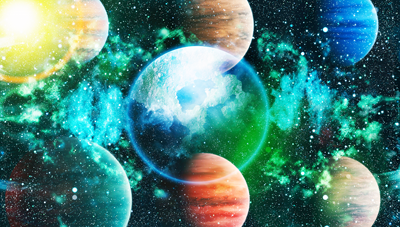
 Unraveling Distant Worlds From Cotton Candy Planets to Ocean Worlds and the Search for Life Among the Exoplanets Dr. Caroline Piaulet-Ghorayeb Saturday, March 21, 2026 2:30 PM PACIFIC TIME ********************************************^^^^^^************ This is a Zoom meeting. Please register: https://m-wise.click/MAR You will receive a confirmation email with the logn information. |
Unraveling Distant Worlds
From Cotton Candy Planets to Ocean Worlds and the Search for Life Among the Exoplanets The discovery of exoplanets has revealed a cosmos teeming with strange and diverse worlds — some scorched by their stars, others light as cotton candy, shrouded in thick atmospheres, and a few that might resemble Earth. From molten lava planets to giant super-puffs and water-rich mini-Neptunes, exoplanets defy expectations at every turn. Join us for a deep dive into the cutting-edge science of exoplanet exploration. How do we detect their atmospheres? Could they support life? And do they offer clues about Earth’s own formation? With new data from the James Webb Space Telescope (JWST) and upcoming telescopes, we are beginning to piece together the story of planetary evolution — unlocking the chemistry of these distant worlds and rethinking the very definition of habitability. Profile Caroline Piaulet-Ghorayeb is an astrophysicist specializing in exoplanet characterization and atmospheric studies. Her research explores the diversity of distant worlds, from super-puffs—enigmatic low-density planets—to water-rich sub-Neptunes and temperate exo-Earths that challenge our understanding of planetary habitability. She has worked with cutting-edge space telescopes like JWST, TESS, and HST. Passionate about science communication, she founded a NPO, InitiaSciences, to open the doors of scientific research labs to high-school students. Caroline is currently a postdoctoral researcher at the University of Chicago, contributing to the next generation of exoplanet discoveries. She received her PhD in Physics (Astrophysics subject) from the University of Montreal, Canada E. Margaret Burbridge Prize Postdoctoral Fellow at the University of Chicago |
|
 Why Everyone Should Read Science Fiction Robert J. Sawyer Saturday, January 10, 2026 2:30 PM PACIFIC TIME ********************************************^^^^^^************ This is a Zoom meeting. Please register: https://space-talk.link/JAN You will receive a confirmation email with the logn information. |
Why Everyone Should Read Science Fiction Science fiction is not what you think. Since the dawn of the genre, SF has been at the forefront of social-justice debates. If you suppose you know what science fiction is all about because you’ve seen Star Wars, Hugo and Nebula Award-winning bestselling author Robert J. Sawyer who will show that Star Wars isn’t science fiction, and introduce you to real SF, a profound mode of st Robert J. Sawyer — called “the dean of Canadian science fiction” by the Ottawa Citizen and “just about the best science fiction writer out there” by the Denver Rocky Mountain News — He has won all three of the world’s top awards for best science-fiction novel of the year: Hugo (which he won for
Hominids)
Nebula (for The Terminal Experiment) John W. Campbell Memorial Award (for Mindscan). Robert A. Heinlein Awarf ;Internationally, he the top SF awards in Japan (three times), Spain (three times), France, and China; and a record-setting seventeen Canadian Science Fiction and Fantasy Awards (“Auroras”). His 25 bestselling novels include The Oppenheimer Alternative, The Downloaded, and FlashForward, which was adapted into the ABC TV series of the same name; Rob was one of the scriptwriters for that series, and he also wrote the two-part finale for the popular fan-film series Star Trek Continues. He was a guest of honor at the 2023 World Science Fiction Convention (the Worldcon) and is a member of the Order of Canada, the highest honor bestowed by the Canadian government. |
|
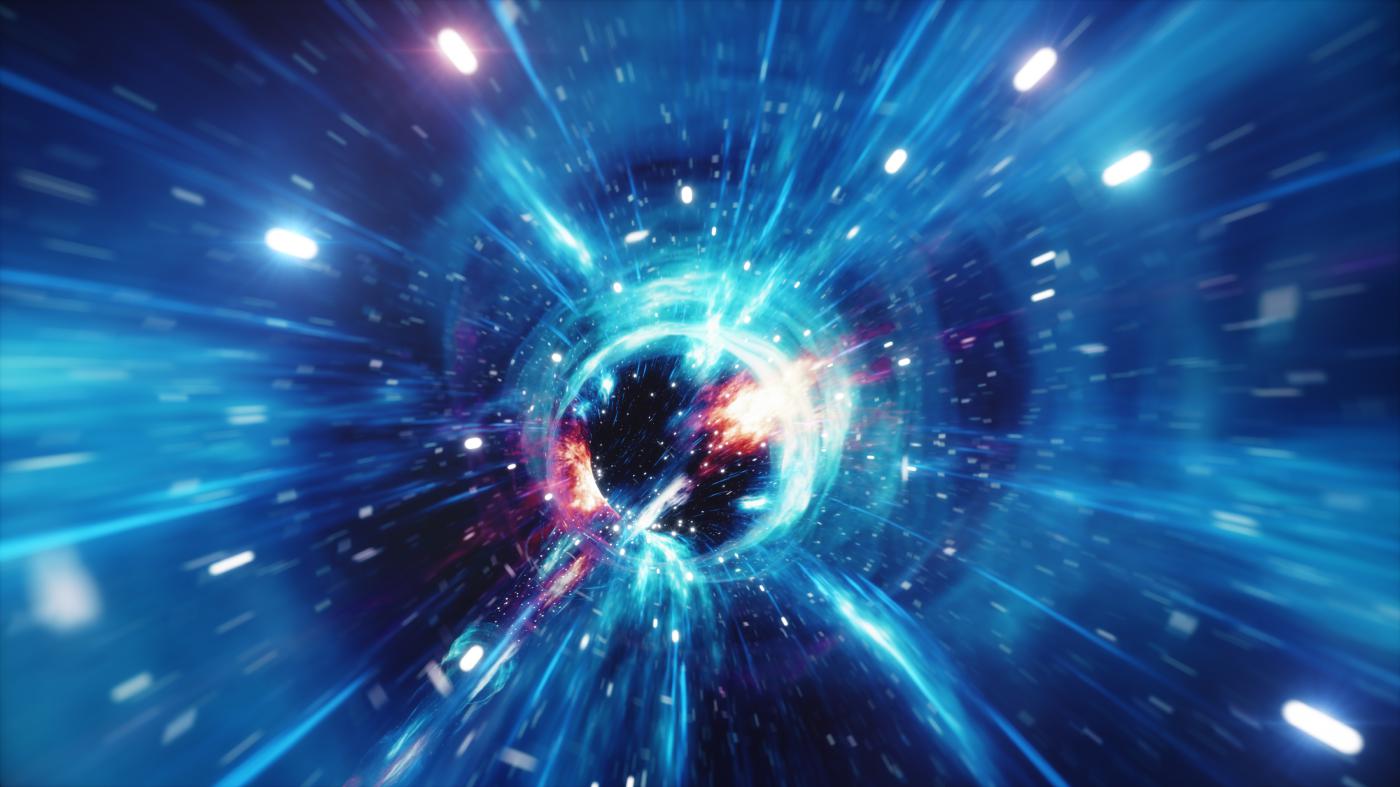 Wormholes, Spacewarps, and Tunnels to Otherwheres Shane Larson Professor of Physics, Clarkson University Saturday, February 21, 2026 2:30 PM PACIFIC TIME ********************************************^^^^^^************ This is a Zoom meeting. Please register: https://space-talk.link/FEB You will receive a confirmation email with the logn information. |
Wormholes, Spacewarps, and Tunnels to Otherwheres The advent of general relativity transformed our understanding of gravity and introduced us to the idea that the underlying fabric of the universe is a tapestry we call “spacetime.” That fabric is a dynamic entity, constantly evolving and changing. It can be bent, twisted, warped — and perhaps ripped. In the hundred years that we have been aware of spacetime, our understanding of it has been informed by astronomical observations, detailed mathematical calculations, vast computer simulations, and wild speculation. Some ideas and predictions, though exotic, have been found to be wholly true; others we are skeptical of, but cannot disprove; of others, we still have no idea what to think. This talk, will discuss the nature of spacetime and our measurements of it, and examine some of the most remarkable predictions we have made about it: black holes, wormholes, and time warps. Shane Larson was a research professor at Northwestern University, serving as Associate Director of CIERA (Center for Interdisciplinary Exploration and Research in Astrophysics) for more than a decade. He joined Clarkson University in the summer of 2025 as a Professor of Physics and the Director of Integrated Engineering and Applied Science Projects. He works in gravitational wave astrophysics, studying compact binary stars and the galaxy with the forthcoming space-based observatory LISA. He is an award-winning teacher and a Fellow of the American Physical Society. He contributes regularly to a public science blog at writescience.wordpress.com and posts at Bluesky with the handle @sciencejedi . Dr. Larson received a BS in Physics from Oregon State University (1991), an MS in Physics from Montana State University (1993), and his PhD in Physics from Montana State University (1999) |
|
| Unraveling Distant Worlds From Cotton Candy Planets to Ocean Worlds and the Search for Life Among the Exoplanets Dr. Caroline Piaulet-Ghorayeb Saturday, March 21, 2026 2:30 PM PACIFIC TIME ********************************************^^^^^^************ This is a Zoom meeting. Please register: https://m-wise.click/MAR You will receive a confirmation email with the logn information. |
Unraveling Distant Worlds From Cotton Candy Planets to Ocean Worlds and the Search for Life Among the Exoplanets The discovery of exoplanets has revealed a cosmos teeming with strange and diverse worlds — some scorched by their stars, others light as cotton candy, shrouded in thick atmospheres, and a few that might resemble Earth. From molten lava planets to giant super-puffs and water-rich mini-Neptunes, exoplanets defy expectations at every turn. Join us for a deep dive into the cutting-edge science of exoplanet exploration. How do we detect their atmospheres? Could they support life? And do they offer clues about Earth’s own formation? With new data from the James Webb Space Telescope (JWST) and upcoming telescopes, we are beginning to piece together the story of planetary evolution — unlocking the chemistry of these distant worlds and rethinking the very definition of habitability. Profile Caroline Piaulet-Ghorayeb is an astrophysicist specializing in exoplanet characterization and atmospheric studies. Her research explores the diversity of distant worlds, from super-puffs—enigmatic low-density planets—to water-rich sub-Neptunes and temperate exo-Earths that challenge our understanding of planetary habitability. She has worked with cutting-edge space telescopes like JWST, TESS, and HST. Passionate about science communication, she founded a NPO, InitiaSciences, to open the doors of scientific research labs to high-school students. Caroline is currently a postdoctoral researcher at the University of Chicago, contributing to the next generation of exoplanet discoveries. She received her PhD in Physics (Astrophysics subject) from the University of Montreal, Canada E. Margaret Burbridge Prize Postdoctoral Fellow at the University of Chicago |
|
 Patterns of the Paranormal Dan Punzak Saturday, April 11, 2026 2:30 PM PACIFIC TIME ********************************************^^^^^^************ This is a Zoom meeting. Please register: https://m-wise.click/APR You will receive a confirmation email with the logn information. |
Patterns of the Paranormal n the vast expanse of the unknown, patterns of the paranormal often emerge, challenging our understanding of the world around us. From near-death experiences to telepathy and psychokinesis, the paranormal encompasses a wide range of mysterious phenomena that defy conventional explanation. In this article, we will delve into the realm of the paranormal, exploring the patterns that have perplexed and fascinated humanity for centuries. Many scientific discoveries have been made by identifying patterns in seemingly unrelated observations. These patterns serve as the breadcrumbs that lead researchers to new insights and understanding. When it comes to the paranormal, these patterns can be elusive yet tantalizing, hinting at realms beyond our current comprehension. Human behavior is a complex and multifaceted phenomenon that defies easy categorization. While physical sciences often rely on mathematical laws and theories to explain natural phenomena, human behavior is far from predictable. This unpredictability makes it challenging to identify consistent patterns in behavior, leading to debates between reductionists and proponents of a more holistic view. Dan Punzak is a 51-year member of Mensa, a Life member, and LocSec of Sangamon Valley Mensa. He holds a degree in Chemical Engineering from Carnegie Mellon University and recently attended his 60-year reunion. He retired from the Illinois Environmental Protection Agency. He is a member of the M_etaphysical Sig and several organizations seeking a deeper understanding of exceptional human experiences, among them the. International Association of Near-Death Studies (IANDS). He has had numerous articles and book reviews in the newsletter of IANDS or the peer reviewed Journal of Near-Death Studies. He has spoken about near-death experiences at several AGs and attended over 25 AGs. |
|
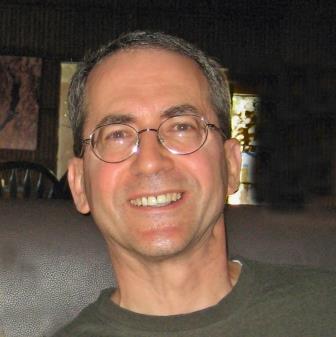 Artificial Intelligence Promise & Perils Lance Erlick Saturday, May 9, 2026 2:30 PM PACIFIC TIME ********************************************^^^^^^************ This is a Zoom meeting. Please register: https://m-wise.click/MAY You will receive a confirmation email with the logn information. |
Artificial Intelligence Promise & Perils Leading scientists have expressed concern about the risks posed by AI. Thanks to recent breakthroughs, many milestones, which experts viewed as decades away only 8 years ago, have now been reached, making experts take seriously the possibility of superintelligence before 2060. Come join a discussion of the current state of AI, the promise, myths, threats, and what we should know about changes coming to our world. Presenter’s Website Lance Erlick has given public presentations since 2014 on topics such as Artificial Intelligence to public libraries, Mensa, and other venues. He worked with computers and programming since age 18, watched capabilities grow exponentially, and has had an interest in robotics and AI throughout his life. This led to writing the Android Chronicles trilogy, about an advanced android with artificial intelligence who rebels against her creator, which was published by Kensington Books. |
|
| |
||
| |
||
| |
||
| |
||